
We must begin by looking into the fundamental ground of our connection with things. Convenience has being sold as a form of freedom over the years. Such things as disposable wrapping, fast fashion, and one-use products became symbols of modern life. However, such an illusion of comfort hides the true expenses: polluted ecosystems, exploited workers and consumed natural resources.
In order to come even nearer to a waste-free society we must understand that it is not only physical waste that is the problem, but rather the concept of something being disposable that causes the problem to be worse. The approach of zero waste leaves us with the idea that we are in fact active individuals in an endless cycle of resources rather than passively consuming goods. There is a story behind every product that we purchase, consume or dispose.
This encompasses the crude material that was employed to produce it, the individuals that produced it and the energy that was employed to transport. When we begin to perceive these invisible connections, our choices become altered in a natural way. We start to purchase less, make more wiser decisions, and maintain what we possess. You do not need to be perfect so as to make this change; you need only to be conscious and have a course.
The Real Issue: Our Disposable Programming.
We have been in a linear economy since time immemorial, playing a simple yet damaging game of taking resources, creating something, using it temporarily, and throwing it in the garbage, where it stays. But where is “away”? Either it goes to the dump, incinerator or the Pacific Ocean.
This system did not appear spontaneously. It was developed under the notion that it would be simple and more improved to an extent that we thought that natural resources are infinite and waste some sort of a modern life. Thus, it is not a matter of poor waste management.
Our culture has taught us that everything new is always better, possession leads to happiness and that there is someone to take care of a product when it ends its life. Each next-day delivery and each snack that already packed gives this illusion even more. Eating without thinking about it what we have taught.
More Than a Trash Can: Zero Waste as Enough Philosophy.
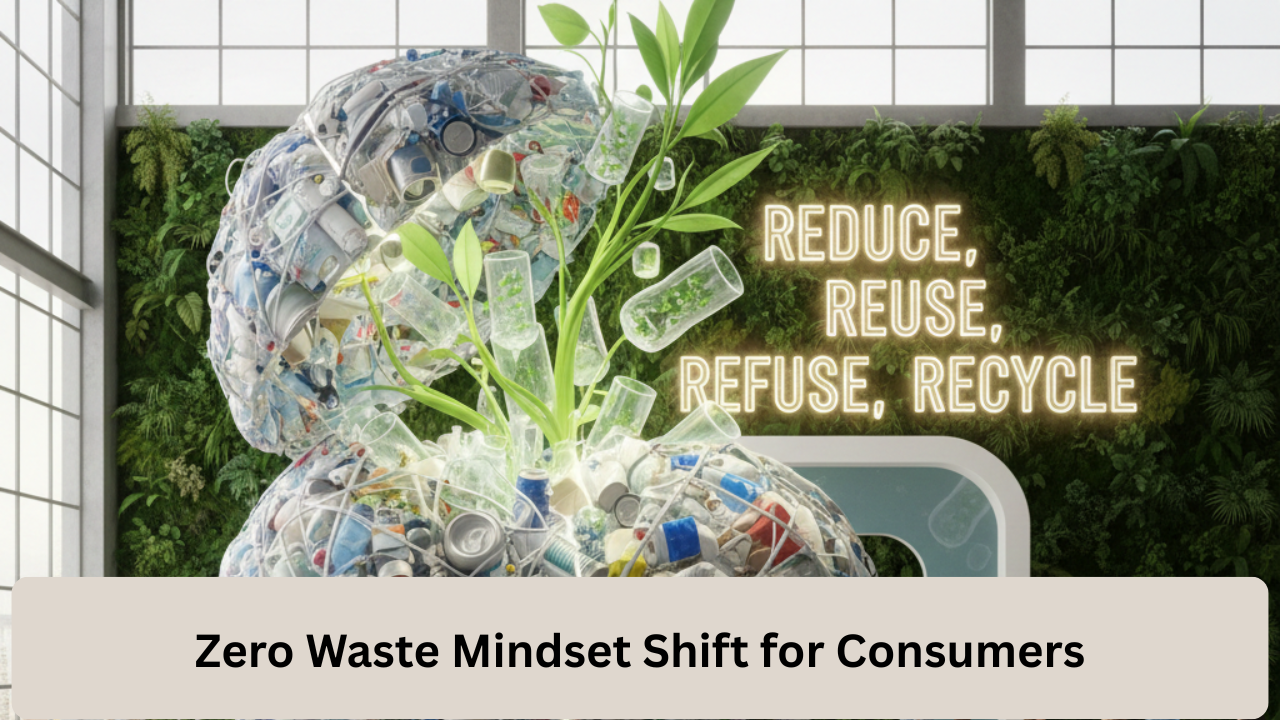
It is concerned that people often believe that zero waste is a pessimistic, idealistic, vision to possess an empty garbage bin. However, in reality it is a positive and progressive method of thinking which aims at transforming our lives in a manner where we never waste. The famous 5 R’s offer us a convenient ranking of priorities, yet they represent a much more profound meaning of values:
- Refusing is the act of saying no with your power to clutter and free stuff as well as to get more and more.
- Reduce implies asking the question of what is enough? and taking quality and intent instead of quantity.
- Reusing is an ingenious and dignified thing to do. It is appreciating the worth of what is already present rather than maintaining a constant search of something new.
- The final part we can do with things we could not prevent to happen is recycling. It demonstrates that materials have not yet become superfluous.
- The most appropriate way of giving back is by rotting; this helps in replenishing the same nutrients to the earth and is a complete cycle.
Such a way of thinking contradicts the very concept of materialism. It does not merely wish us to consider the objects of our purchases, but the entire story of the objects, the water, the energy, the human labor, and the ecosystems that are a part of everything with which we have to deal.
The Power of Your Plate: The Guilt to the Agency.
Very frequently, the environmental messages contain the elements of guilt and depict miserable images of ruined habitats. This may be depressing, but guilt does not make a good long-term motivators. It causes you to tired and stressed. The philosophy of zero-waste should also founded on the provision of power and control to people. It is that profound understanding that you are not only putting drops in the ocean, but your vote into.
The type of world you would prefer to exist in. By purchasing a reusable bottle by millions of people, backing up a local refillery, or repairing a pair of shoes they adore, they create a massive message to the market. The shift in the way individuals purchase goods is what causes businesses to alter their packaging, start-ups create compostable substances, and politicians can legally prohibit single-use plastics. A vote in your shopping cart.
The Journey of a Thousand Small Acts: Hermit Building the Habit.
It is not going to be a fast process changing your thoughts to this new style of thinking. It is gradual, progressive, as learning to play a musical instrument. Begins with a caring interest, not of self.
You have to be a detective at home first. Check your trash. A single weekend, all you have to do is look at what you dispose of. It is not an issue of being ashamed; it is one of facts. The brutality of your garbage is a fearfully accurate measure of what you consume.
Then begin with easy, delightful changes:
- Adore a beautiful long life water bottle.
- Search the tote bag that expresses your fashion.
- Discover what it is like to deplete all the ingredients in a kitchen sink soup.
- Establish a new routine when you are about to purchase something. Stop and ask:
- Does I really require this or do I just want it?
- Borrow, purchase second hand or make the best of it?
- Is this constructed to last, and can it repaired?
Conclusion
It is not merely an ecological trend to transition to a zero waste mentality but it is a fundamental shift in the way we live, eat and engage with the world. The true change occurs when citizens realize that each and every action as well as every purchase and even the stuff that they discard has a consequence. The future of our planet is in our joint action when we make responsible choices such as not purchasing unnecessary items, using less, recycling correctly, and composting the leftovers.
The zero waste movement does not aim at being perfect, but to achieve progress and create awareness. It reminds us that we have to redefine the success not in terms of what we possess but the way we take care of the planet upon which we all rest. Individuals who act in a deliberate manner might make huge changes in the system.
They are able to make innovation, transform industries and inspire others to follow suit. Ultimately, a zero-waste attitude allows us to live a better and simpler life, think more critically, and leave a legacy of nurture over garbage. The initial step in the path to make a decision that waste does not necessarily have to occur but can altered.