
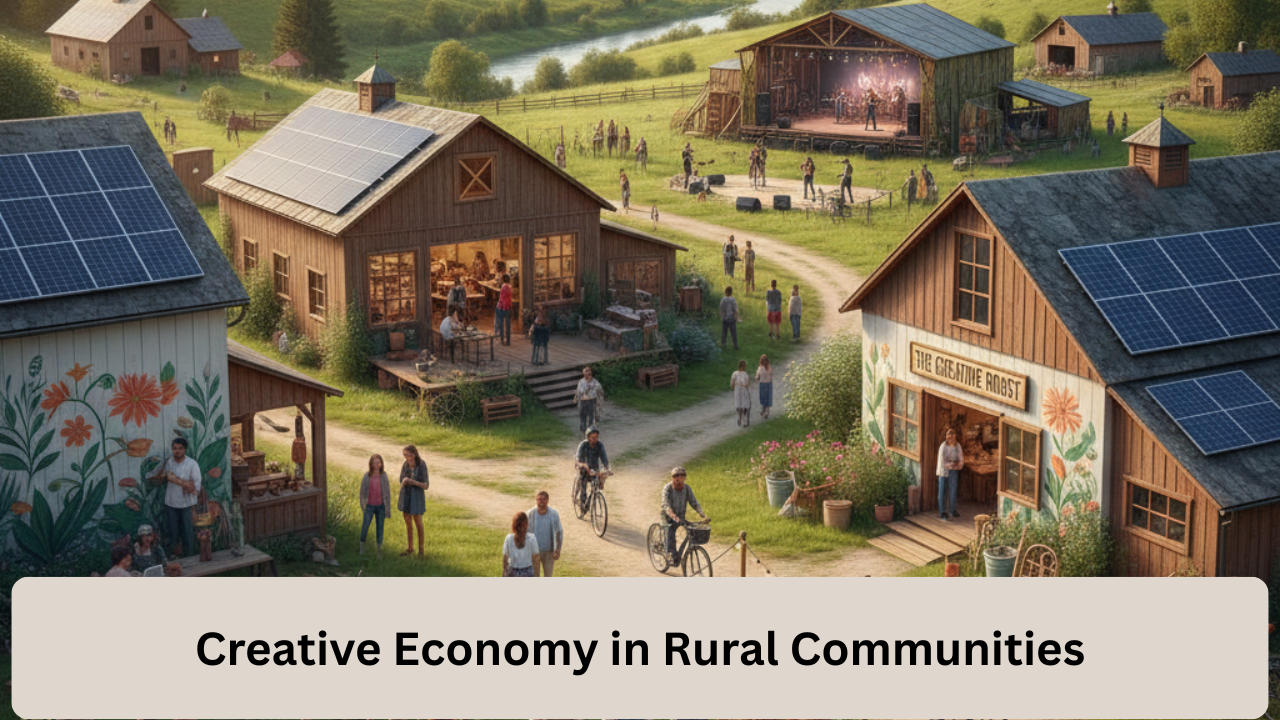
This is more common in the recent years when the phrase creative economy was a trend as a change agent in the world development. The creative economy is founded on creativity and novel ideas and culture. It covers such areas as design, crafts, music, film, architecture, digital media and heritage-based businesses.
Creative economy has always been associated with cities with artists and businessmen, but it is beginning to demonstrate that it can assist rural regions in developing. Through Innovativeness, rural communities are able to generate sustainable livelihoods, retain their cultural heritage, and make their communities more sustainable by tapping into their local talents, traditions and natural resources.
An understanding of the Creative Economy.
Economic activities that are attained due to the creativity, skill as well as the ability of people constitute the creative economy. These activities may also result in income and job creation by the creation and utilization of intellectual property. According to United Nations Conference of Trade and Development (UNCTAD), it is among. The quickest expanding components of the world economy.
More importantly it unites both economical and cultural spheres of being connecting innovation with identity. To the rural population, this concept is not only about gaining money on art or crafts. It is a form of path to building that considers local knowledge, customs and stories as valuable assets. The rich cultural valuables that can found within the rural communities like traditional music and dance, food tradition and handicrafts and so forth can brought back and sold through creative industries.
Creativity and the Rural Development.
The lack of work, migration of youth to urban centers, and decline of agricultural earnings are some of the issues that are common in rural regions. Yet, it is usually these very groups that possess close social connections and have distinct cultural capital, which can engaged to initiate creative business. As an example, traditional weaving, pottery and woodcarving.
That was once believed to be a way to earn a living could become the products that compete with the ones that produced in other nations when they combined with the modern design and branding. Another manner in which the creative economy can develop in the rural areas is through tourism. By providing visitors with tangible experiences, cultural festivals, art residencies, and heritage tours can also attract money and increase municipal pride.
There are also new market places that digital platforms have formed. Craftsmen are now able to sell directly to the customers around the globe eliminating the middlemen and increasing the profits. In addition, creative industries make people feel that they are a part of the society. They provide women, youths, and other classes that are usually outside the economy with an opportunity to participate in practices that do not focus on formal education or high sums of money.
Digital Divide and Technology.
The digitization has revolutionized the creative economies of the rural regions. E-commerce platforms, online education, and social media marketing can make rural artists available to the people that are not within their local markets. A small hamlet artist can promote their handcrafted jewelry in the Instagram feed, receive orders all over the globe, and even collaborate with designers abroad.
However, there is still work to done. Low internet access, bad infrastructure and digital illiteracy may all complicate the process of people engaging in the global creative economy. Closing this digital divide is actually important. Governments and other development bodies must invest in connectivity, training and innovation centers through.
Which the rural business owners can take maximum advantage of the digital facets. By teaching the youth how to design using tools, how to tell stories using digital methods, and how to market products on the internet, rural areas could transformed into creative centers.
The development of sustainable and open futures.
Creative economy is a means of surviving which not limited to earning money. It also promotes identity, community and the environment. Creative enterprises usually are not as harmful to the environment as extractive industries and can easily adapt to the local context. They contribute to the formation of cyclical economies and ethical consumerism by appreciating things made by hand and those that locally sourced and that are of cultural importance.
It is equally important to be inclusive. The cooperatives of women, the youth clubs and even the indigenous societies have shown that creativity can build up communities internally. With the access to resources, training, and fair markets, these organizations can do a lot. They are able to retain traditions and also create new ones.
Conclusion
Creative economy of the rural places is not only another variant of doing business, but an entirely new style of thinking about development. It bridges the gap between the past and the future because it grounded on culture, inspired by new ideas, and provided by the community.
It is no longer viewed as an out of the way place, but rural locations are now developed as creative frontiers where folks get to generate cultural and economic value through the use of ideas, storytelling, and craftsmanship. Rural creative economy is a bright model of the development that is open to all, long-term and people-centered.
This is due to the fact that governments, businesses, and communities are beginning to discover the power of creativity. It gets us to believe that maybe the next big idea not going to be created with the help of tall building in the metropolis, but with the help of a little village where old ideas and new ideas come together.