
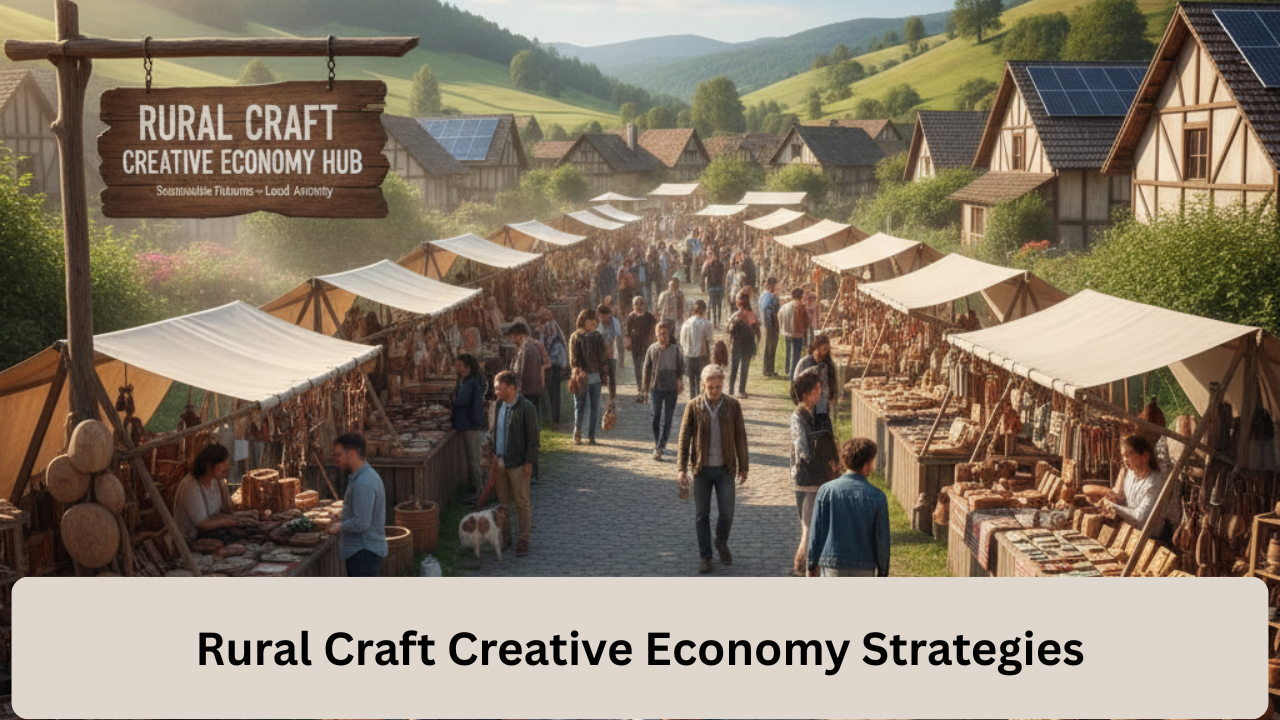
Creative economy has emerged as a major development powerhouse that involves all the people, safeguards the culture, and is environmental friendly. The rural craft business lies at a special junction in this broad spectrum. They combine work and art and their origins are their heritage and communality.
Rural craft sectors must find ways of increasing their output, getting more access to the market and developing the skills of their artisans in order to fully exploit their potential. This essay discusses some key opportunities to develop the rural craft creative economy taking into consideration cultural authenticity and contemporary commercial opportunities.
Realizing the place of rural crafts in the creative economy. Rural crafts are a blend of both the old and new thought. Such arts as weaving, ceramics, woodcarving, and metallurgy were acted on across the generations and chronicle local history. They are also in most instances, one of the few means by which rural families can earn money.
Recognizing the Value of Rural Crafts
However despite having so much cultural value, rural artisans are normally faced with the problem of accessing market places since they lack infrastructural support and many new designs. Rural crafts have been of commercial and social value in the bigger context of the creative economy, which views imagination, knowledge and cultural expression as economic assets.
They not only provide employment but also assist women to acquire equal rights (as most of the craftspeople are women), and to enhance the identity of the town. Therefore, it is better to think of how to help rural crafts to flourish and not only earn the money, but preserve culture and make the rural land more resilient.
Enhancing local production and value chains. Enhancing the local production processes is one of the major measures to make the creative economy of rural crafts more efficient. Old tools and processes used by many craftspeople, and this could result in less coherent work and productivity. With the correct technology such as improved looms, environment friendly dyes or more efficient kilns, the productivity can increased without compromising.
Strengthening Local Production and Value Chains
The artisans that make their products distinctive. It is also important to develop local value chains. It is a combination of groups of artists, suppliers and cooperatives that are able to divide resources, pool raw materials and plan logistics. The rural craft groups have greater bargaining power when they work in groups; this is because they are able to reduce their cost of production.
These networks can be served by public bodies and NGOs through providing them with places to work in groups, which might community workshops, material banks, and quality control centers. Collaboration and development of new ideas to design. The old and the new markets relate through design innovation. The crafts need to evolve to meet the demands of the consumer and at the same time retain their cultural identities.
The collaboration between craftspeople and designers may transform old patterns, materials and methods to new life. This means that traditional textiles can made into the current fashion lines, or that local ceramic types used in the minimalist interior. Design schools, universities, creative businesspeople can all contribute significantly through collaborating with others to develop collections, developing design residences in isolated locations, or educating individuals.
Promoting Design Innovation and Collaboration
On the trends of color, ergonomics, and how to design products that are unique to others. Such alliances not only make products more attractive, but also allow artists to think and come up with new ideas as business owners. Entering the market and going digital. The digital transformation altering the manner which crafts distributed to individuals.
Online technology can assist rural craftsmen in dismantling geographic distance and connect with their customers around the globe. Through e-commerce websites, social networking, and digital narration, artisans are able to present their work directly to buyers, visitors as well as collectors. By attending digital literacy courses that include photography, social media advertising and online sales management, artisans have the opportunity to become significantly more competitive.
Governments and creative hubs can assist individuals in going online by creating collective market places online of rural products such as the Tribes India platform, in India or the KriyaNusa platform, in Indonesia. The digital venues are not only able to sell but also to introduce artists to wholesalers, design mentors and methods of raising funds through crowd funding.
Conclusion
Creativity as a So-called Giving of Power to Rural Areas. The rural craft industries are not a thing of the past, they are a source of cultural innovation and long term development. The rural territories can transform the craft production into a vivid creative economy by integrating their tradition into business. Several points of a holistic approach and plan that involves the enhancement of local production.
The promotion of design partnership, utilization of digital resources, brand building, and ensuring sustainability are essential to success. Ultimately, it is powering of rural craftsmen which implies empowering creativity at the grassroots level. When the appropriate support given, the rural craft industries conserve cultural identity, give employment opportunities to all, and demonstrate to the world their creativity.