
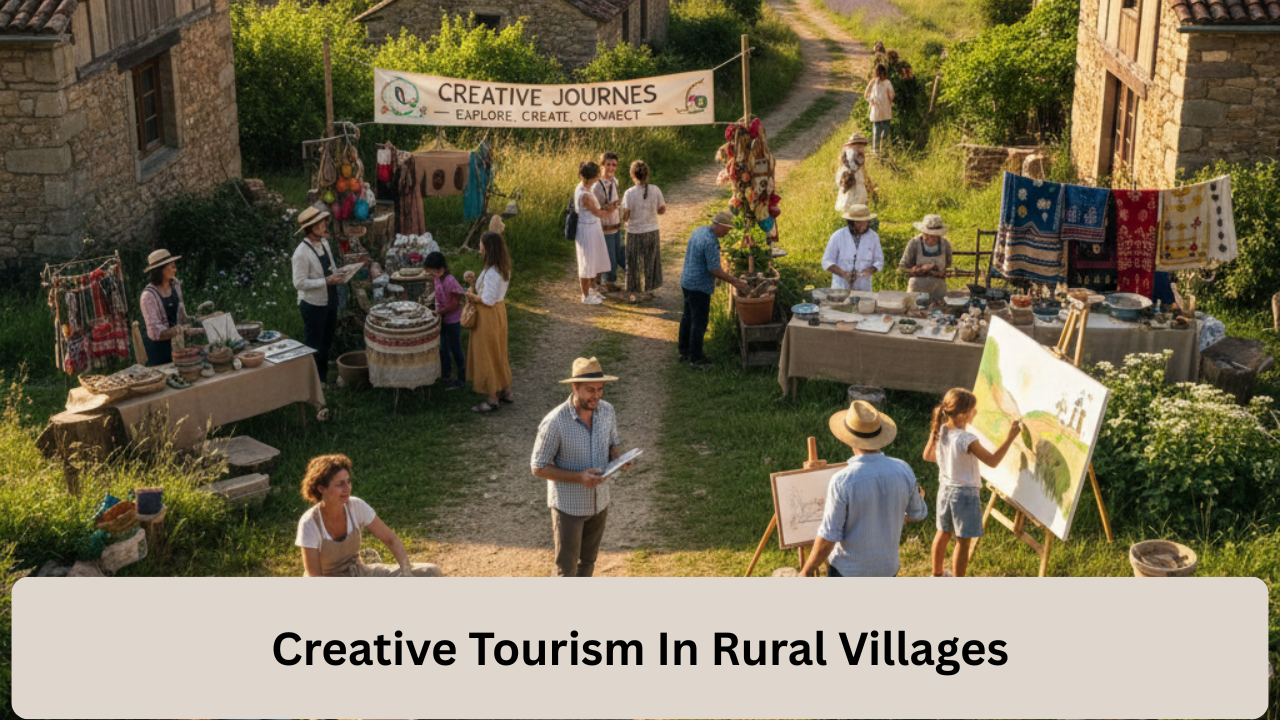
In rural societies, the creative tourism is a nice alternative to mass tourism, which often involves large resorts, urban areas, and experiences that are not much personal. It enhances genuineness, cultural interchange and domestic empowerment. This article discusses how creative tourism can transform the otherwise quiet rural villages into vibrant tourist destinations.
The advantages and disadvantages of the given practice, and how the travelers and communities can participate in this form of traveling in a valuable manner. Creative tourism is a form of cultural tourism that emphasizes active participation by visitors in creative activities that are characteristic of the destination.
Unlike traditional tourism, where tourists are passive spectators, creative tourism encourages them to learn, create, and interact with the local people. Visitors might join workshops on pottery, weaving, cooking, dancing, painting, or other traditional crafts. Through these experiences, they not only acquire new skills but also gain a deeper understanding of the host community’s way of life, values, and traditions.
What does a creative tourism mean?
Creative tourism is not only looking at something. According to Creative Tourism Network(r), it provides alternative to the means of knowing the culture and the know-how of a place, which offered by the real experiences of the local stakeholders.
In the village, this could take the form of various assorted things, including seminars and experience in traditional crafts, experience with food and agriculture, participatory art or a cultural discussion with someone in the village.
The difference is it involves doing, not seeing. Visitors are engaged creative processes a purposeful manner, as opposed to being spectators only. That is, rather than merely being a tourist on a tour, the tourists contribute to the creation of their own experience often with the assistance of the village people.
Why choose small towns? The Promise of Change
The rural villages have a great potential in this type of tourism. Here are some reasons why:
- Yet to be utilized cultural and natural resources.
The countryside has its own culture, crafts, landscape and lifestyles which not frequently featured the well-known tourism. Creative tourism assists in developing such assets to shine and be more useful. As an example, rural tourism is not just about sightseeing nature, but it is also about sightseeing people, how they live, craft, and even feast. - Opportunity to earn and spread.
Creative tourism provides alternative ways of earning money to the rural areas that rely on agriculture or lack alternative sources of employment. Indonesian studies show that tourism villages contributed to the start-up of small enterprises and a rise in family income. - Saving culture and identity.
Creative tourism can serve to preserve the risk of losing or becoming commonplace when it comes to keeping local arts, foodways, tales, and heritage in the limelight. Actually, the establishment of tourism villages has been termed as a measure of preservation of the unique cultural heritage and traditions as well as the natural landscape of the rural folk. - Sustainable and inclusive development.
According to the United Nations World Tourism Organization (UNWTO), the projects of tourism-villages will be able to reduce the existing gap between rural and urban zones, give women and youth a greater power, and promote the environmentally-friendly attitude.
What can creative tourism in a small town be like?
Imagine how it were to live in a small country village to-day, but still better: The visitors participate in a handicraft project, which they are taught to weave, carve wood, or make pottery with the local artisans.
- Tourists visit the fields or farms of the locals and assist them with planting or harvesting, and afterwards have lunch with the food that they collected.
- The village residents have themed craft nights or cultural music clashes, fire-side storytelling, or art residencies in the countryside. These incidents make the village a microscopic creative place.
- It can be enhanced through digital means: interactive applications, art trails augmented reality, personalized souvenirs production, and connecting local craft with a bigger market.
- An analysis of the Beraban Village in Bali showed that there was a multiplier effect of creative tourism. It caused people to be more eager to exchange their culture, allowed preserving the past through the experience learning, and allowed the interactions between hosts and guests to be more equitable.
Brand Strategy: Best Practices.
There are strategies that may make you enjoy the best of your investments and also minimize the risks.
- Engage the community at the outset: develop prototypes where community members the driving force or co-driving force behind the project and what presented reflects the community.
- Ensure the distribution of benefits between people is even. Establish the means of exchanging both monetary and non-monetary means and opportunities among a broad spectrum of households, not only several.
- Make local culture and creative involvement the priority: Tours should not include people merely as spectators, they should be practical. Invite the visitors and the residents to communicate with each other and exchange ideas.
- Develop infrastructure and capacity that are mutually complementary: Provide training in hospitality, craft management and marketing: Ensure that facilities are at an acceptable level.
- Take caution with your digital and artistic devices: Take advantage of digital storytelling, e-commerce websites, and interactive experiences to communicate with more people and ensure younger visitors are engaged.
- Monitor the number of tourists, conserve the local ecosystem and heritage and do not over-commercialize the tourism.
Conclusion
Rural tourism that creative a powerful alternative to conventional tourism. Moreover, by making local culture, creativity, and community the core part of the experience, tourism becomes more meaningful to visitors. As a result, it provides villages with new opportunities for growth and reveals innovative ways for rural development to progress in a more sustainable and inclusive manner.
The obstacles include fairness, infrastructure and authenticity, but when handled cautiously, the rewards enormous: the culture preserved, the economy stimulated, communities empowered, and the visitors provided with the experience of a lifetime.
The peaceful streets of the rural areas, the craftsman-made studio and farm-stay cooking course could be some new destinations as we seek more responsible, local, and enriching travel. It is not the village on the map anymore but a place of culture, exchange and life that the rural village is when it welcomes innovation.