
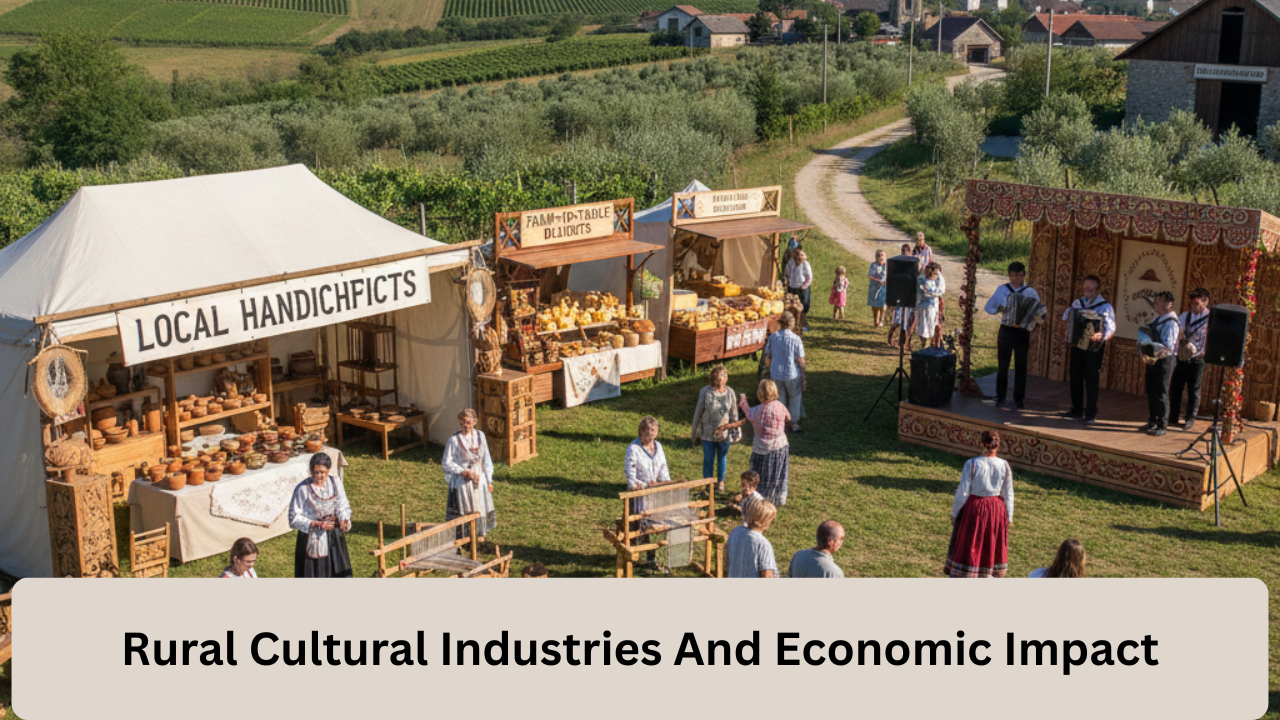
People have narrated the story of rural life, over hundreds of years, in terms of its physical product, the crop of the fields, the timber of the trees, and the ore of the earth. Nevertheless, there is a revolution that is taking place quietly. It also identifies the more enduring of resources, the culture, tradition, and innovation that have been accumulated in these communities.
Over hundreds of years. Rural cultural industries, such as the sounding of a loom or the undulating notes of a folk song are no longer a sweet backdrop. They are becoming a powerful, religious economy that is transforming the future of the rural regions.
This is not only the sales of crafts. It concerns a tremendous shift in the way people in the rural part of the country consider their resources. They are building a formula of growth that does not only generate employment opportunities but also fosters community connection and retains a unique lifestyle to succeeding generations by bringing together innovation, heritage and commerce.
Economic Contributions of Rural Cultural Sectors
Imagine the hands of a genius weaver, and they move, in a manner her grandmother instructed her. Imagine that the vibrant soul of a local harvest celebration, whereby individuals gleefully share olden day dances and delicacies. Consider a local dish as a family recipe, where all ingredients give an account of the location.
These are the cultural businesses that make rural areas living. They are the economic activities that are direct out of the cultural knowledge, customs and history of a community. The rural cultural industries are highly contrasting to the urban creative industries because the latter are not always in search of global trends. They are a significant component of the historical community, social life, and the nature. They not only create things they also bring meaning, identity and a sense of place.
To many individuals, these sectors offer them a lifeline which enables them to make ends meet considering they do not know when their agricultural earnings will trickle in and create a more stable lifestyle which can withstand the shocks of the drought or falling commodity, prices.
The impact of Local Crafts in the entire world.
The effect this awakening of culture has on the economy is real and permanent, and the vibrations go miles beyond the studio of the artisan. First, they make a lot of jobs. Cultural industries provide artists, entertainers, food producers, and guides with a dignified job in places where employment is difficult to find. A single town that specializes in either pottery or textile production can provide dozens of households and this provides money in the community and prevents the migration of the youth to areas that are overcrowded.
Second, they assist the local businesses in starting. It is not about attracting big businesses. It has to do with providing the local artisan with equipment that will help them in establishing their own business. Micro-enterprises are on the rise, like a woman forming a cooperative to sell the embroidery of her community, a musician recording folk music of the community and a family converting their farm to a dining place. Such small businesses are the actual support of the rural economy since they make people be creative and self-reliant.
Third, and, perhaps, most importantly, they attract numerous cultural tourists. Today, people who travel desire to touch things that are real. They do not simply wish to see a landscape they want to hear what it is like indoors. This ensures that they desire to visit the countryside to have a hands-on experience such as learning how to weave with a master, attending a local festival, or sampling dishes that have been prepared using recipes dating back to a certain era.
Preservation of Cultural Heritage Through Industry
Important as are the economic gains that such sectors provide, often the true value of a sector lies in the social and cultural value that it adds. They are safeguarding the intangible things. In a world where all things are increasingly becoming homogenized due to the globalization, these industries ensure that no unique dialect, a forgotten song or a complex weaving method fades away. They do not preserve traditions like a museum piece, but living and breathing pieces, which creates a great feeling of pride and continuity.
They are also excellent means of granting individuals power. Women and youths are the ones who are usually at the front. Women cooperatives that run crafts provide women with more than money. They make them feel more confident and have leadership skills and a greater voice in community affairs. These industries provide the youth with a high incentive to remain, brainstorm and create a future in their home town full of innovative ideas that will revive the old traditions.
Searching a solution to the issues: the path to the long-term model. Naturally, there are issues with this road. The visibility gap most creators in rural regions face is one of the reasons why such creators find it difficult to connect with people outside their regions since these creators lack the digital skills or marketing contacts they require. The other problematic aspect is how to fit the demand without making a religious ceremony look like a home shopping network merchandise.
Conclusion
Cultural industries in the rural areas play a significant role as a connector between traditions and economic growth. These industries can be used to produce significant revenues, support entrepreneurship, and implement sustainable ways of doing business that help to boost and strengthen the local identity, relying on traditional knowledge. Their economic influence is not only tangible in terms of monetary benefits, but also in terms of social unity, culture preservation, and the development of the area.
Market access, sustainability and sharing of benefits equally are some of the challenges, which must be addressed in order to bring out the full potential of rural cultural industries. Rural cultural industries can form a part and parcel of inclusive, resilient and culturally alive economies through supportive policies, capacity building and community engagement and make the rural communities successful in a modern globalized world.